


Books on Male Sexuality: What a Urologist's 800-Page Guide Explains
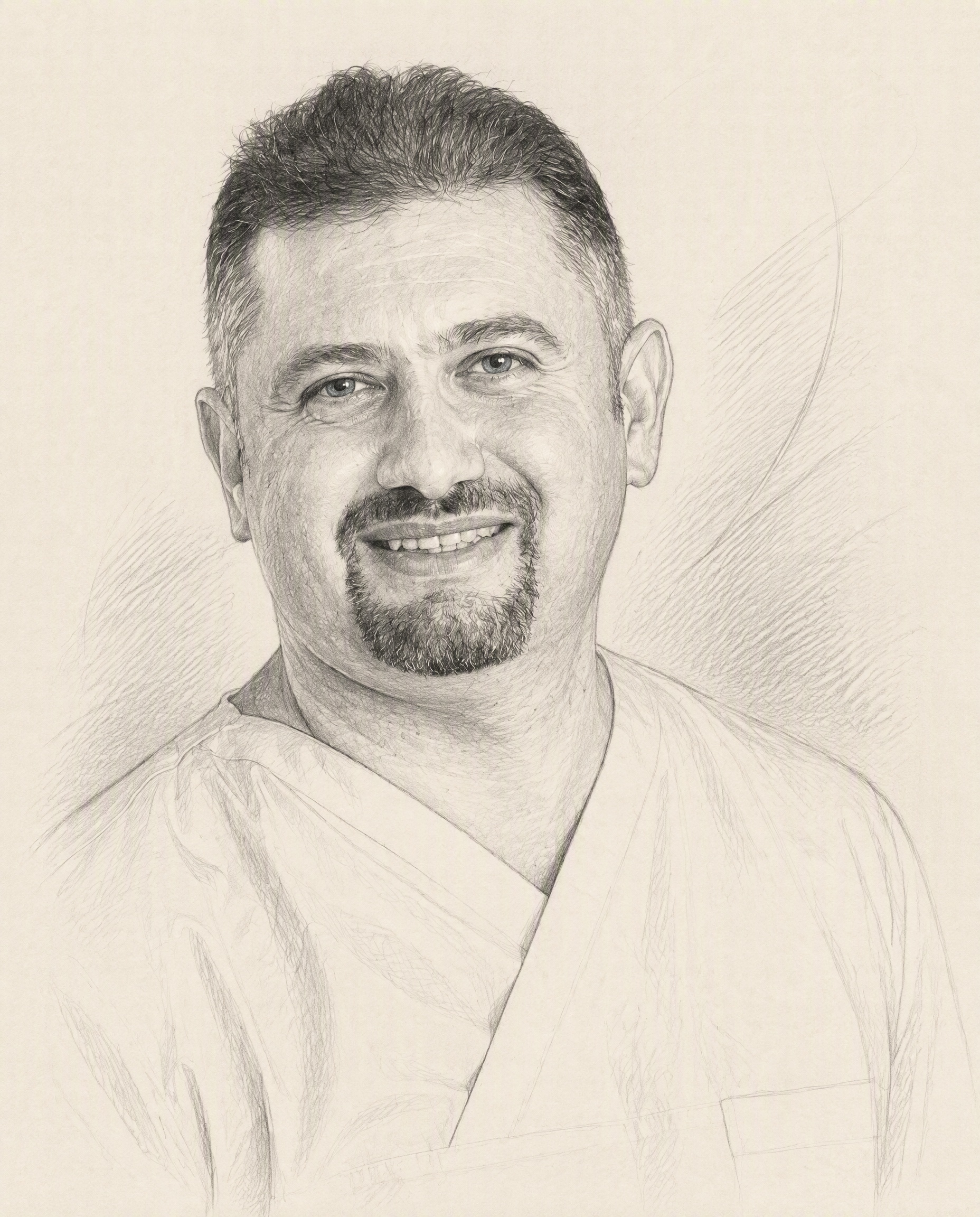

Male Sexuality: A Sexual Medicine Perspective is an 800-page eBook in which a urologist explains erections, ejaculation, desire and the couple for men, partners and clinicians. Among books on male sexuality, it sits between self-help and textbooks. In most cases it is enough to understand sexual function; however, if you have symptoms, it does not replace an examination.
The book has 32 chapters and more than 900 references, it is checked against current European guidelines on sexual medicine, and every copy comes with an AI assistant that answers questions from the book itself. I wrote it in the same language I use with patients in the consulting room. You can find the full table of contents on the book's official website.
Why Do Men Need Reliable Books on Male Sexuality?
Men need reliable books on male sexuality because sexual problems are common and most men never discuss them with a doctor. A trustworthy source fills the gap before forums, myths and advertising do, and it helps a man recognise when a symptom deserves a medical visit rather than another supplement or another year of silence.
The numbers explain why. In the Massachusetts Male Aging Study, 52% of men aged 40 to 70 reported some degree of erectile dysfunction (Feldman et al., 1994). In the Premature Ejaculation Prevalence and Attitudes survey of 12,133 men, 22.7% met the criteria for premature ejaculation, yet only 9.0% of them had consulted a physician (Porst et al., 2007).
Silence is the rule rather than the exception. The Global Study of Sexual Attitudes and Behaviors, which surveyed 27,500 men and women aged 40 to 80, found that fewer than 19% of people with a sexual problem had sought medical help, and only 9% had ever been asked about their sexual health by a doctor during a routine visit in the previous three years (Moreira et al., 2005).
There is also a medical reason not to stay silent. In a cohort of 9,457 men followed in the Prostate Cancer Prevention Trial, erectile dysfunction was associated with a 45% higher risk of later cardiovascular events (hazard ratio 1.45), as Thompson and colleagues reported in JAMA in 2005. An erection problem can be the first visible sign of a vascular problem, which is why both the book and our page on how erectile dysfunction is assessed and treated start with the heart and blood vessels before any medication.
What Makes a Urologist's Guide Different From Other Books on Male Sexuality?
It is written by a practising urologist, checked against the guidelines of the European Association of Urology and the definitions of the International Society for Sexual Medicine, and supported by more than 900 references. At the same time, it is written for general readers, so a man can follow it without a medical dictionary.
Most popular titles treat sex either as pure mechanics or as pure psychology. In practice the two rarely separate. A man with a vascular erection problem soon develops performance anxiety; a man with anxiety soon notices weaker erections. The book follows both threads together, from blood flow and hormones to the mind and the relationship, and it gives the psychological factors that affect sexual performance the same weight as the physiology.
The book is also honest about the limits of evidence. When a treatment is supported by randomised trials, it says so; when an idea is popular but unproven, it says that too. Readers deserve to know the difference between a guideline recommendation and a marketing claim.
What Does Male Sexuality: A Sexual Medicine Perspective Cover?
The book has 32 chapters arranged in five parts: foundations, erection problems, ejaculation and orgasm, desire and behaviour, and conditions that are easily overlooked. It moves from how the body works to diagnosis and the main treatment options, and it closes with validated questionnaires and a glossary of terms.
Part One, Foundations (8 chapters): penile anatomy, the physiology of erection, types of erection and the sexual response cycle, the biochemistry and hormones of sex, and male psychosexual development.
Part Two, Erection Problems (7 chapters): sexual history and assessment, organic and psychogenic causes, performance anxiety, medical treatments, the patient's view and sex therapy, including penile rehabilitation, low-intensity shock wave therapy and penile implant surgery.
Part Three, Ejaculation and Orgasm (5 chapters): definitions and causes of premature ejaculation, the partner's dimension, a step-by-step treatment plan, and delayed ejaculation.
Part Four, Desire, Body and Behaviour (9 chapters): low sexual desire, myths, masturbation, oral and anal sex, penis size, pornography, sexual aversion, compulsive sexual behaviour and sexual diversity.
Part Five, Easily Overlooked (3 chapters): the pelvic floor, rare and unusual sexual conditions, and the partner's role in female sexual dysfunction.
If your main question is about desire, the chapter on low sexual desire builds on the same ideas as our guide to what is normal and what is not in libido, with far more detail on hormones, medication and the couple.
How Is Male Sexuality: A Sexual Medicine Perspective Designed to Be Used?
Every chapter works in layers. The main text is written for every reader, Clinical Note boxes add professional detail, Key Takeaways close each chapter, and original figures and tables make the physiology visible. Urgency maps show when a symptom needs emergency care, when it can wait a few days, and when a planned visit is enough.
In numbers, the book contains more than 150 Clinical Note boxes, 50 original figures, 58 comparison tables and urgency maps with three levels. A general reader can skip the Clinical Notes without losing the thread; a physician, resident or therapist can read them as a compact summary of diagnostic criteria, protocols and pitfalls.
Who Should Read Books on Male Sexuality Written by a Urologist?
Books on male sexuality written by a urologist suit three groups: men who want to understand a symptom before they see a doctor, partners who want to understand what their partner is going through, and health professionals who want a structured, referenced overview of sexual medicine in one place.
For men, the book is a way to arrive at a consultation with better questions and fewer fears. For partners, several chapters deal directly with the couple, because many sexual problems are maintained by silence on both sides; our article on communication in sexual relationships explains why talking is part of treatment. For clinicians, the Clinical Notes and the reference list make it usable as a working text.
How Does the Male Sexuality AI Book Assistant Work?
Every copy includes a personal access code for the AI Book Assistant on the book's website. Readers can ask up to 150 questions with no time limit, and the assistant answers from the book's content. It gives general information only; it does not diagnose, and it does not replace a consultation with a physician.
The assistant is useful when you remember a topic but not the chapter, or when you want a passage explained in simpler words. Conversations are not stored on the site, and no account or email address is needed. You can see how it works on the Book Assistant page.
Where Can You Read Male Sexuality: A Sexual Medicine Perspective?
The book is available as an eBook on Google Play Books and can be read on a phone, tablet or computer with the free Google Play Books app or in a web browser. Before buying, you can read a free sample and selected pages through the Google Books preview.
You can get the eBook on Google Play Books or read a free preview on Google Books. The access code for the AI assistant is printed inside every copy.
Frequently Asked Questions
Is Male Sexuality: A Sexual Medicine Perspective Only for Doctors?
No. The main text is written for general readers in plain language, and the professional detail sits in separate Clinical Note boxes that can be skipped. The medical content follows the European Association of Urology guidelines on sexual and reproductive health (Salonia et al., European Urology, 2021), so both audiences read the same evidence base.
Can Reading a Book Help With Erectile Dysfunction?
A book cannot treat erectile dysfunction, but it can change what a man does next. The Massachusetts Male Aging Study (Feldman et al., 1994) found some degree of erectile dysfunction in 52% of men aged 40 to 70, and a JAMA cohort (Thompson et al., 2005) linked it to a 45% higher risk of later cardiovascular events. Understanding this usually leads to an earlier, better-prepared medical visit.
Does Male Sexuality: A Sexual Medicine Perspective Cover Premature Ejaculation?
Yes. Part Three has five chapters on ejaculation and orgasm, including definitions, causes, the partner's role and a treatment plan. It uses the definition of the International Society for Sexual Medicine, which the European Association of Urology guidelines have adopted. In the PEPA survey of 12,133 men (Porst et al., European Urology, 2007), 22.7% had premature ejaculation and only 9.0% had consulted a physician.
Is the Male Sexuality AI Book Assistant a Medical Service?
No. The assistant gives general information drawn from the book and does not diagnose or prescribe. This matches the approach of the European Association of Urology guidelines (Salonia et al., 2021), which state that patients should be fully informed and then decide on management together with their treating physician. Anyone with symptoms should still be examined in person.
Is Male Sexuality: A Sexual Medicine Perspective Useful for Partners?
Yes. Several chapters deal with the couple, including the partner's dimension of premature ejaculation and the partner's role in female sexual dysfunction. In the Global Study of Sexual Attitudes and Behaviors (Moreira et al., 2005), talking to the partner was the most frequent action people took for a sexual problem (39%), more common than seeking medical help, so partners need accurate information too.
How Many References Support Male Sexuality: A Sexual Medicine Perspective?
More than 900 references support the text, including European Association of Urology guidelines, International Society for Sexual Medicine definitions and peer-reviewed studies such as the Massachusetts Male Aging Study (Feldman et al., Journal of Urology, 1994). Key points are summarised at the end of every chapter so that readers can return to the evidence quickly.
This article is for informational purposes only and is not a substitute for professional medical advice, diagnosis or treatment. If you have symptoms, talk to your doctor.
Contact
Niyazi Umut Özdemir, MD · Urologist
Address: Fener Mah. Bülent Ecevit Bulv. No:23 Kanyon Plaza K:4 D:7, Muratpaşa / Antalya, Türkiye
Phone: +90 535 399 89 99
WhatsApp: +90 535 399 89 99
Opening hours: Monday to Friday 09:00-17:30, Saturday 09:00-12:00
ORCID: 0000-0002-6457-4770
References
Feldman HA, Goldstein I, Hatzichristou DG, Krane RJ, McKinlay JB. Impotence and its medical and psychosocial correlates: results of the Massachusetts Male Aging Study. J Urol. 1994;151(1):54-61.
Porst H, Montorsi F, Rosen RC, Gaynor L, Grupe S, Alexander J. The Premature Ejaculation Prevalence and Attitudes (PEPA) survey: prevalence, comorbidities, and professional help-seeking. Eur Urol. 2007;51(3):816-823.
Moreira ED, Brock G, Glasser DB, et al. Help-seeking behaviour for sexual problems: the Global Study of Sexual Attitudes and Behaviors. Int J Clin Pract. 2005;59(1):6-16.
Thompson IM, Tangen CM, Goodman PJ, Probstfield JL, Moinpour CM, Coltman CA. Erectile dysfunction and subsequent cardiovascular disease. JAMA. 2005;294(23):2996-3002.
Salonia A, Bettocchi C, Boeri L, et al. European Association of Urology Guidelines on Sexual and Reproductive Health, 2021 Update: Male Sexual Dysfunction. Eur Urol. 2021;80(3):333-357.
Last reviewed: 18 October 2026


Comments